


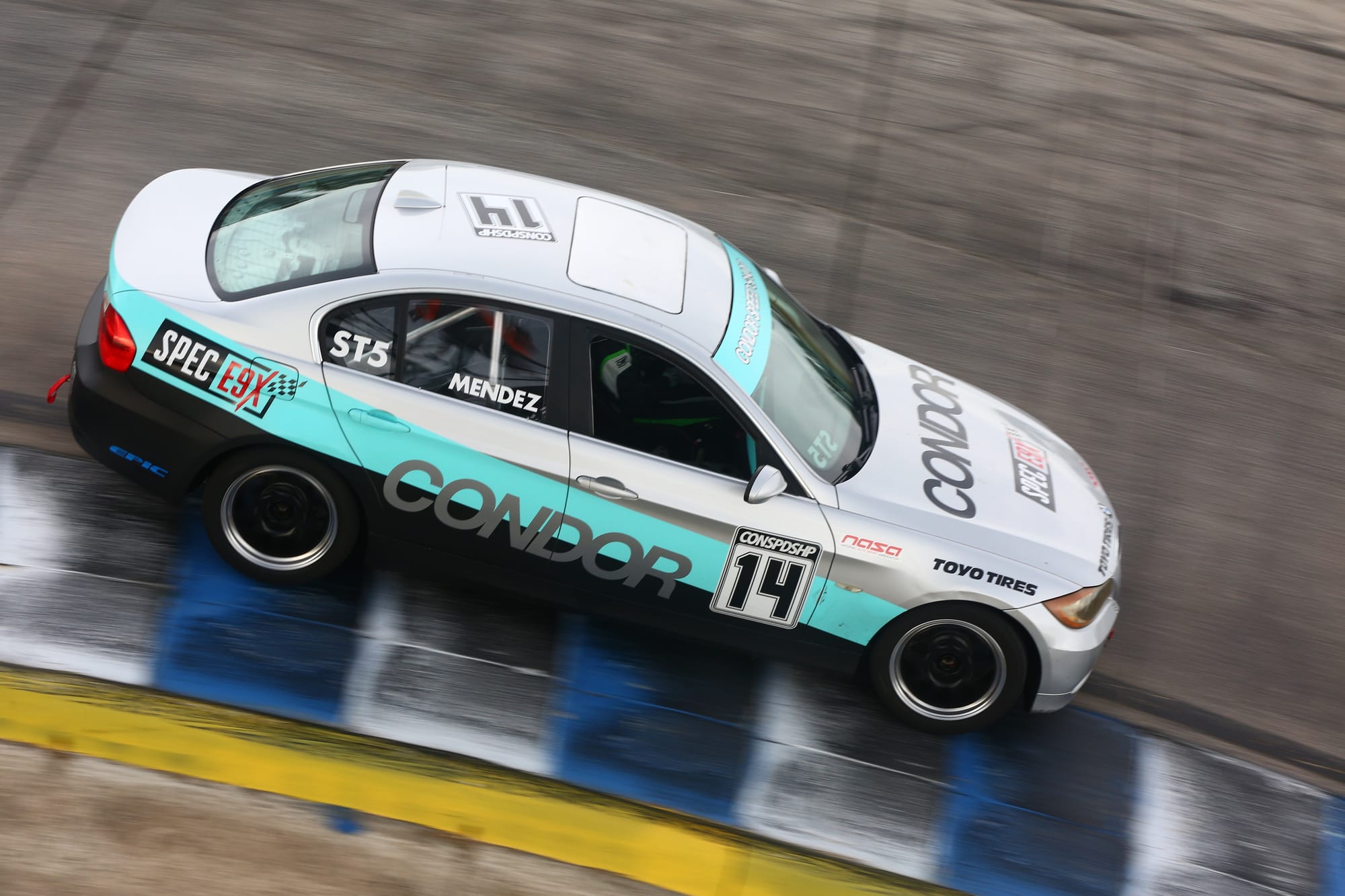
The 2026 NASA Championships are less than six months away. Although I am taking the year off from driving, I'm still trying to stay as involved in racing as possible. To that end, I'm still aiming to play an integral role in Team Condor Speed Shop's racing efforts. Just as he did at the 2021 Daytona Championships, Carlos Mendez is planning to campaign two cars, aiming to add two more national titles to his name.
I always intended to write up a series about our efforts at the 2021 Champs, but I never got around to it. So now that we are getting started on prepping for the '26 Champs, what better time to document the process?
Articles may be slow over the next few months, but if my motivation stays high and the articles are well-received, they will likely ramp up closer to and after the event in September.
T-Minus 6 Months
Dialing in Car Classification
To begin prepping and optimizing, we need a game plan to ensure the cars are as competitive as possible.
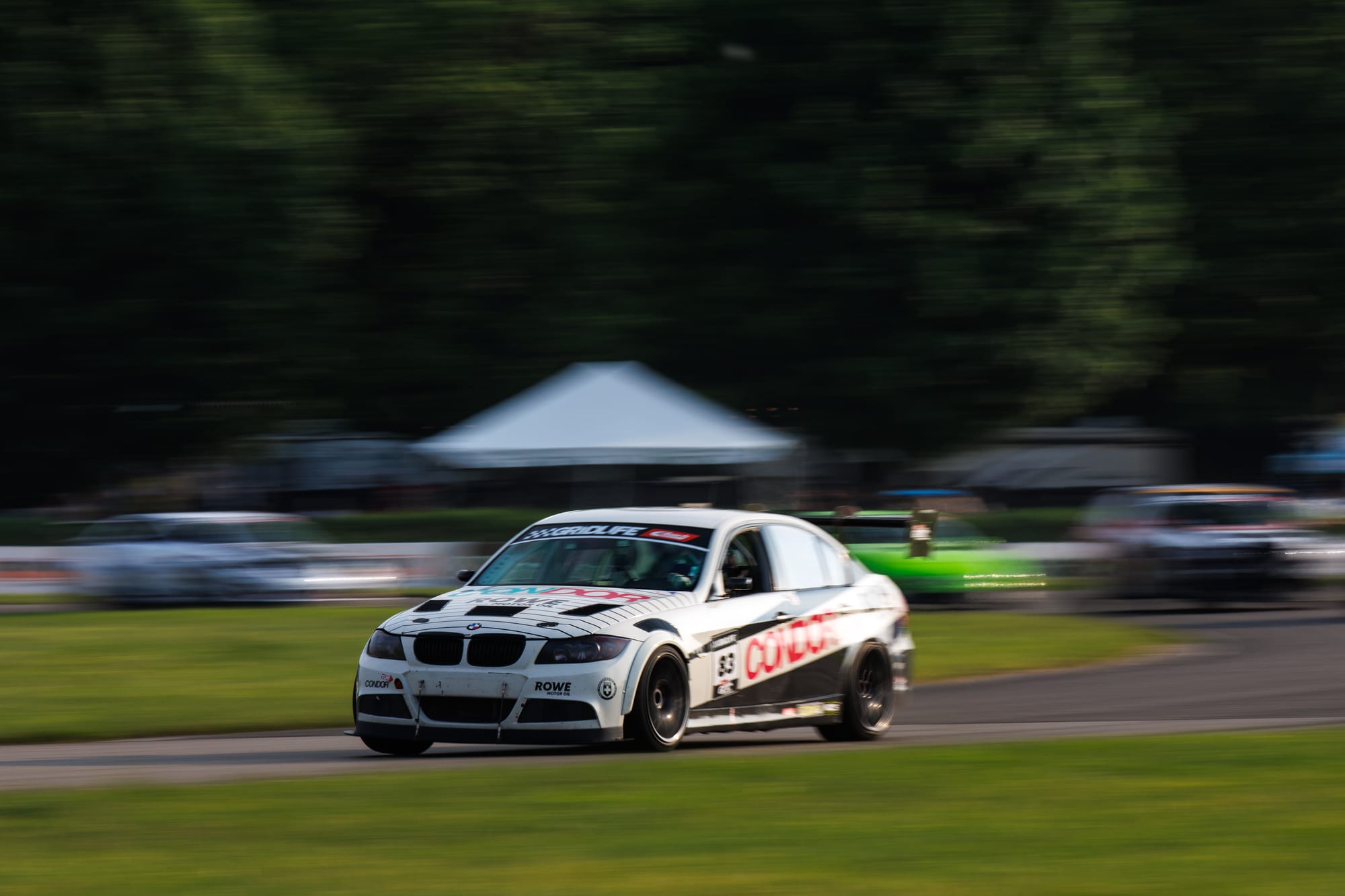
Carlos's #14 Spec E9X car will run in Super Touring 5 (ST5), but will remain in full spec-class trim. His #83 GLTC car will run in German Touring Series 2 (GTS2). These classings present a unique challenge, as neither car is intentionally built around these specific rulebooks.
In 2021, Carlos also ran a Spec E9X car in ST5, but it had the distinct advantage of being a rocket ship on the long straights at Daytona—an almost unbeatable combination. At the time, the second car was already optimized for the Spec E30 class, so not much special prep was needed.
Sebring is a much more balanced race track than Daytona, requiring a competitive car to perform well in every area. Any one deficiency will leave you vulnerable in a competitive class.
Super Touring 5
Since we know that relatively heavy, higher-horsepower cars are easier to pass with and harder to get past in power-to-weight classes, the Spec E9X is already a solid choice for ST5. However, a mid-power car with a full aero package and sticky tires (like an E36 M3) will be stiff competition at Sebring.
While not much can be done to optimize the Spec E9x car since it must remain spec-legal, it is still important to ensure the car passes strict ST5-legal scrutiny and maintains the best possible power-to-weight ratio allowed by the class.
German Touring Series 2
We've only dabbled in the GTS playground a few times, but their class is far more open than Super Touring. The GLTC E90 won't require much to be competitive in GTS2. It will need a larger front splitter, the correct tire choice, and a small amount of ballast to be legal.
However, we will definitely need to dive deeper into the GTS rulebook and classification forms to ensure everything is in order and maxed out.
Calculating a Game Plan
Although NASA keeps updating the ST4-6 tire balance charts, we've already been using the classification calculators for each class to work through a variety of scenarios.
Tire choice will be critical for both cars, as Spec E9X allows the Toyo R and Maxxis RC-1 tires, each with its own pros and cons. GTS2 allows any DOT-legal tire, and there are many fast options available. Tire testing will be required this summer.
Being prepared to maximize the allowed power-to-weight ratios will also require dyno testing and careful fuel calculations to ensure the cars run at the optimal weights.

Don't get caught flat-footed if you want to be competitive in a national-level race. Start prepping now, and you'll have far less to do and worry about when you arrive at the track for race week!
Let's drive faster together