


This BMW Motorsport factory team-built E36 chassis surfaced (again) this week for under 9,000 Euros, which, given its history and condition, seems like a bargain.
Sideways Stories published a great piece on Bengt Ekström (the namesake on the window) and his motorsports career, which shines some light on the car's origins and history. It's worth the quick read.
Continuing our popular Dissected series, I'll discuss what we can see, deduce, and infer from the listing photos.
The sale listing is available here. All photos are copyrighted by their respective owners and are used under the fair use doctrine (17 U.S. Code § 107). The photos were found via www.plan-cars.com.
Exterior & Bodywork
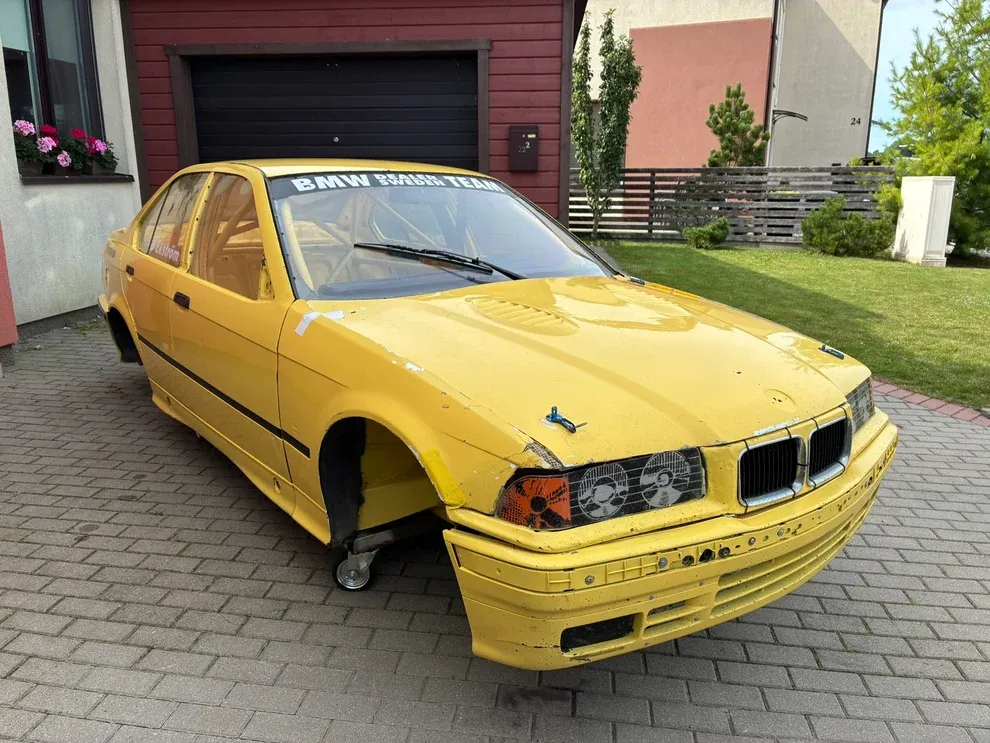
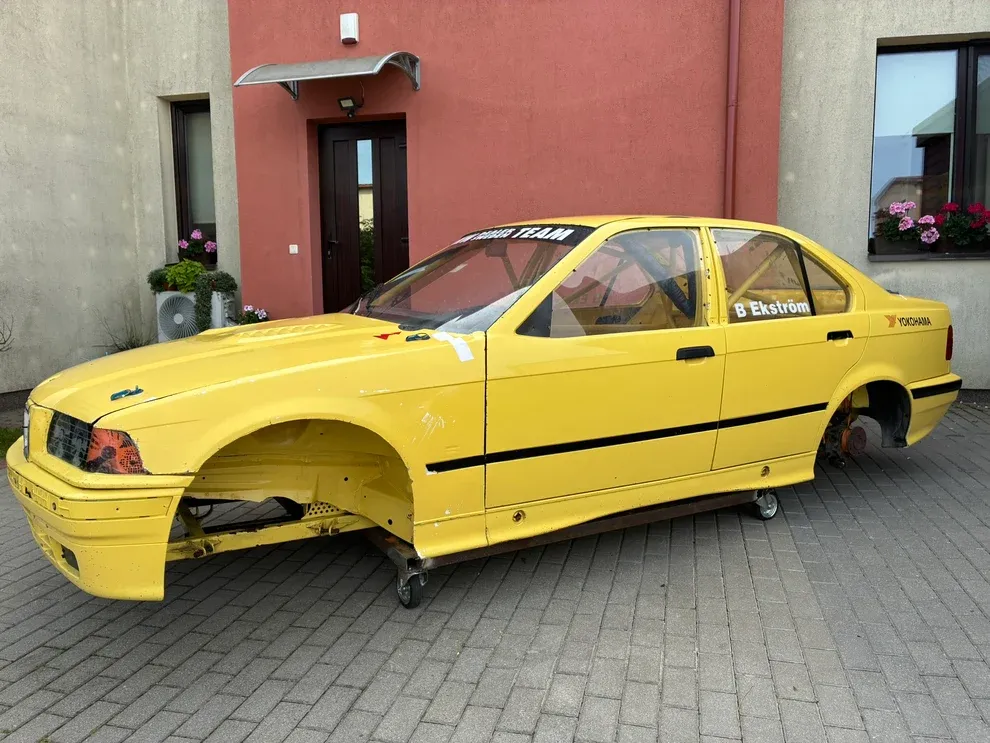
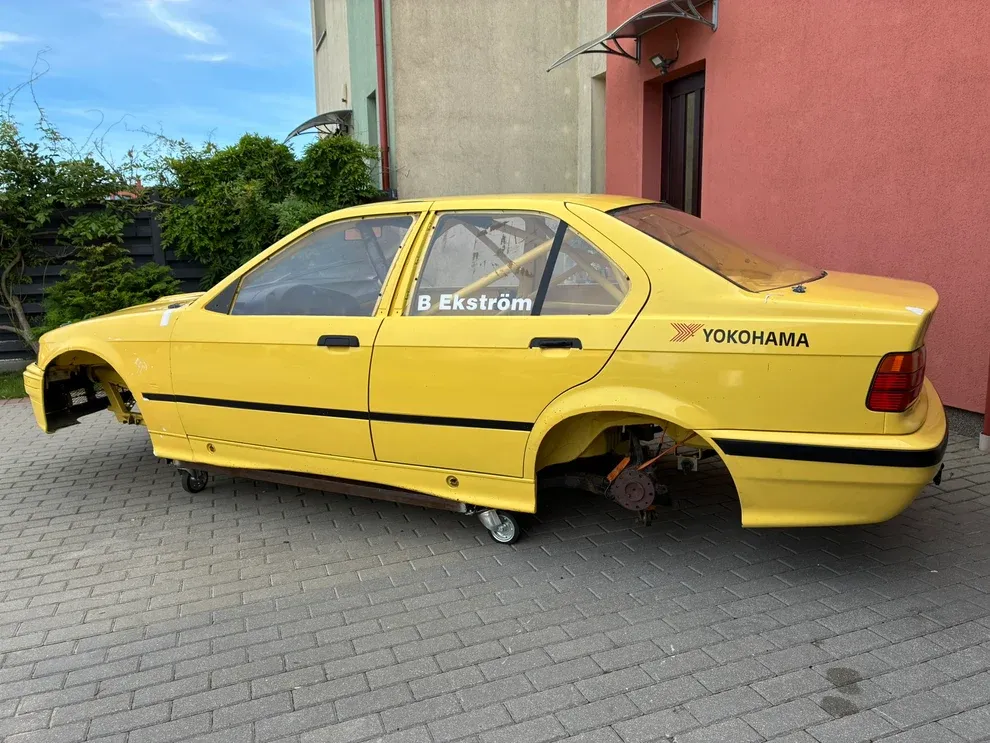
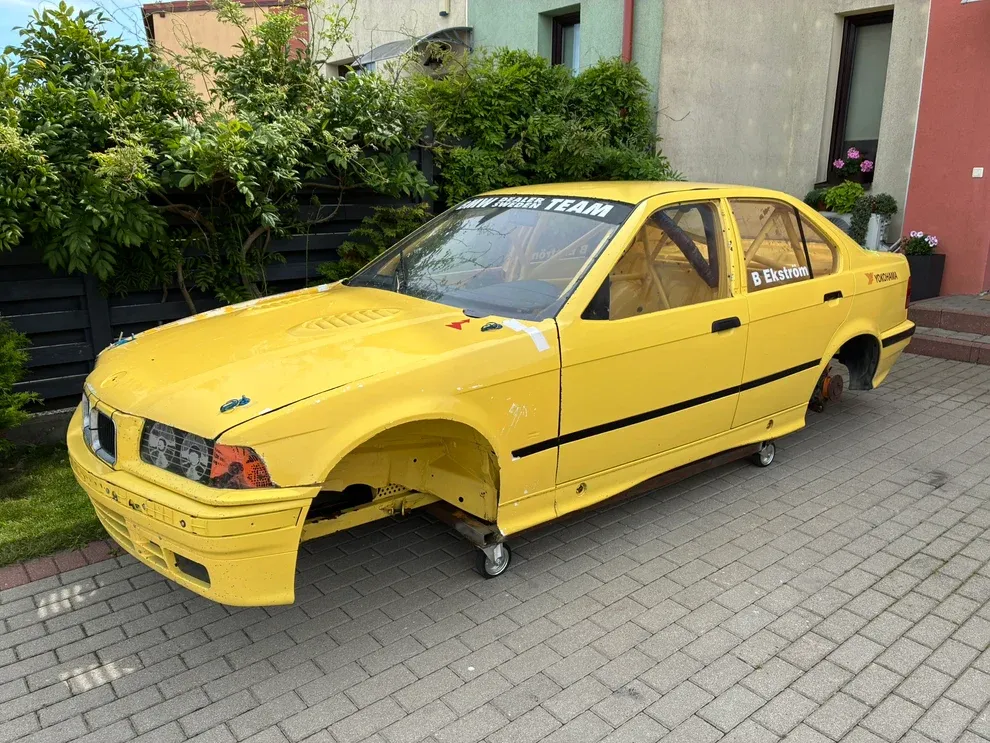
The car's exterior looks remarkably like a stock early model sedan, until you look closer.
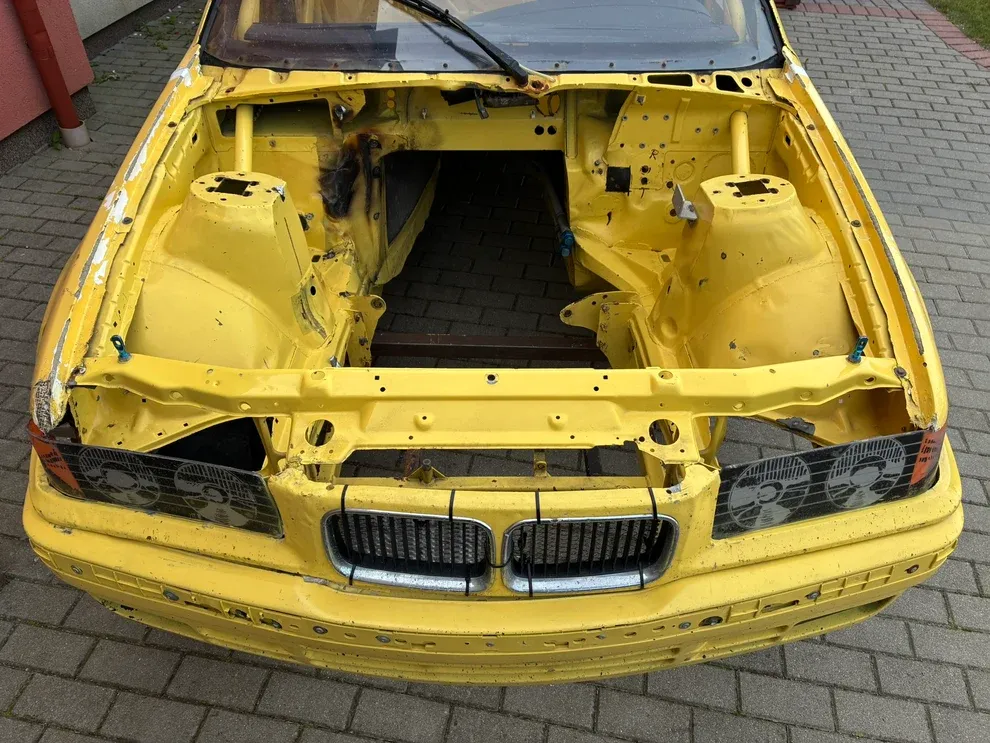
The front fenders are fiberglass, and the hood might be, too. The hood has teardrop-shaped vents in the center toward the cowl, a design I've never seen before on any BTCC or STW cars. It might not be obvious, but the front fenders are likely enlarged by at least 15mm to offer more tire clearance for the slammed ride heights.
The headlight and corner light blanking panels are masterfully designed to look just like the real articles from a distance.
Perhaps the only other noteworthy exterior items are that all the windows are plexiglass, and the door/fender side moldings are absent (the black lines are either paint or vinyl).
Roll Cage Design
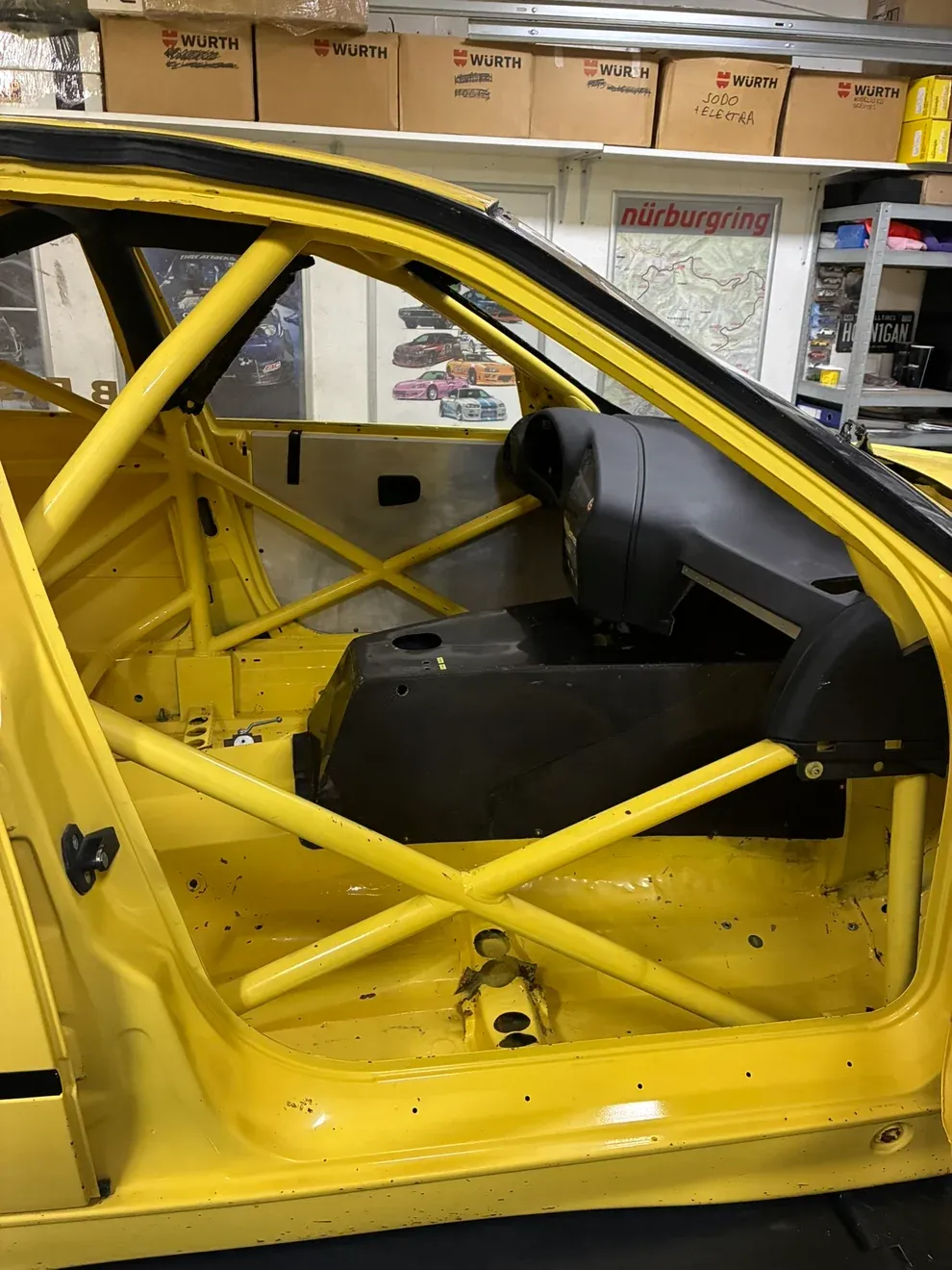
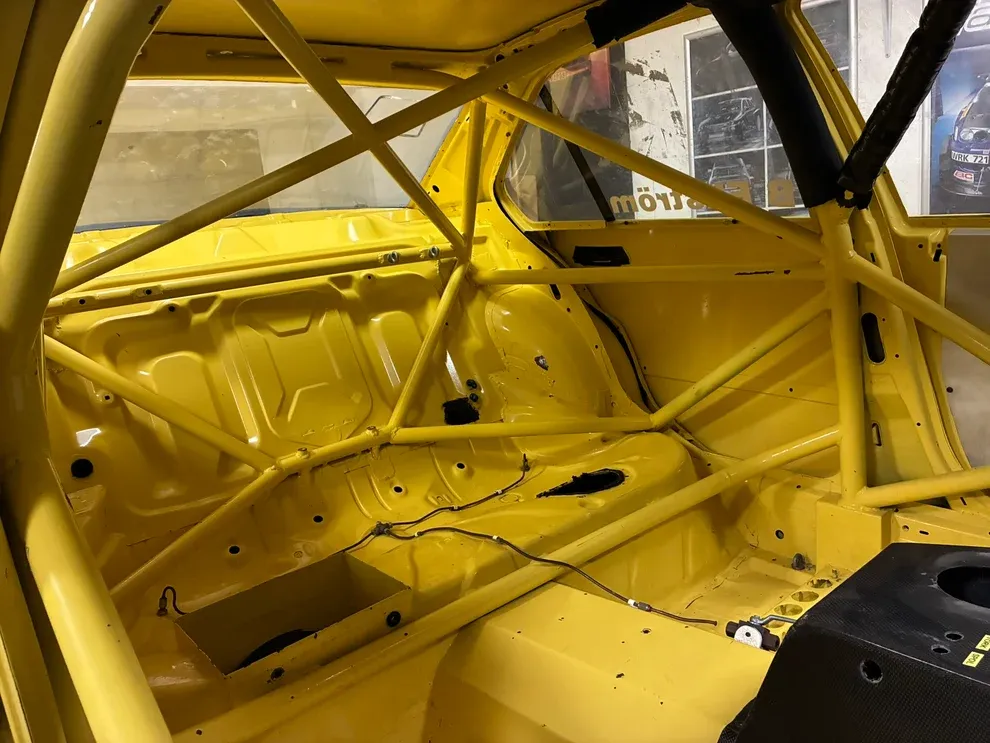
European cage designs of the era were very strange in comparison to what we are used to now. The "main" hoop at the B-pillars had no diagonal bracing or harness bar, and the C-pillars had their own hoop of sorts.
This design first appeared on late-model E30 M3 Group N cars, and the idea was that the more vertical C-pillar bars could better pick up loads from the rear shock towers. Given the Group N E30 rear spring rate range of 1027 lb/in up to 1825 lb/in, the need for the bracing is clearer.
You can see the eyelets for the seat belt mounting back at the rear firewall. The belts were incredibly long and crossed over each other. This design fell out of favor in the 2000s, and now belts are typically attached as short as safely possible.
Both door bars are simple bisecting X's without gussets or any other adornments. Because of the node locations, the X's are quite high; paired with the large diagonal A-pillar braces, egress in this car would be tight.
Front Suspension
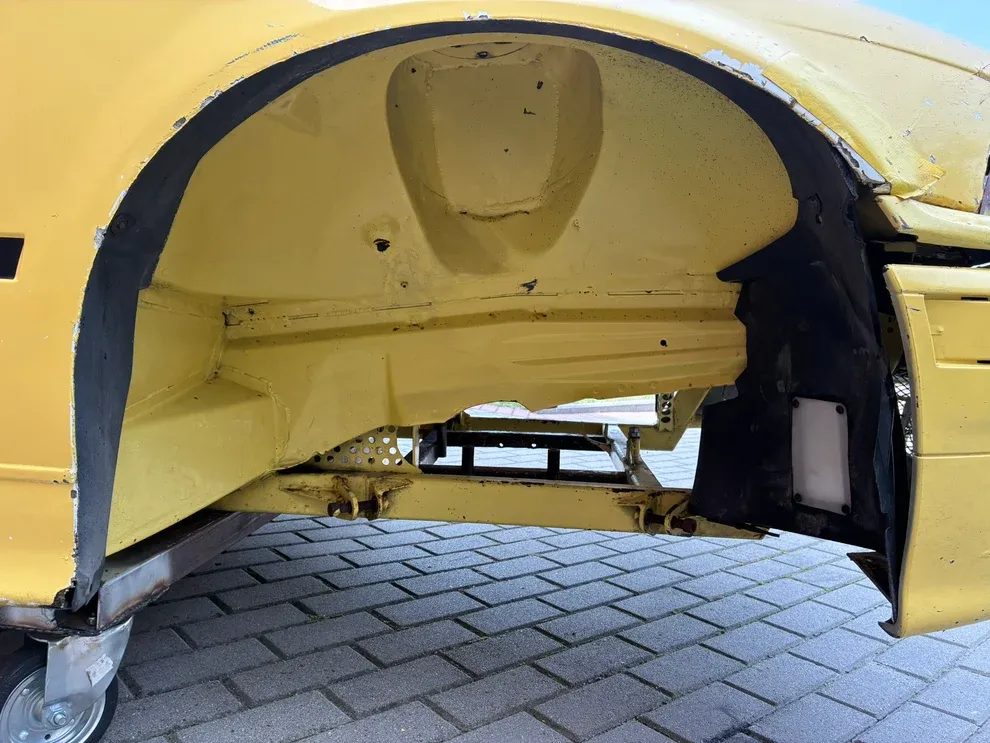
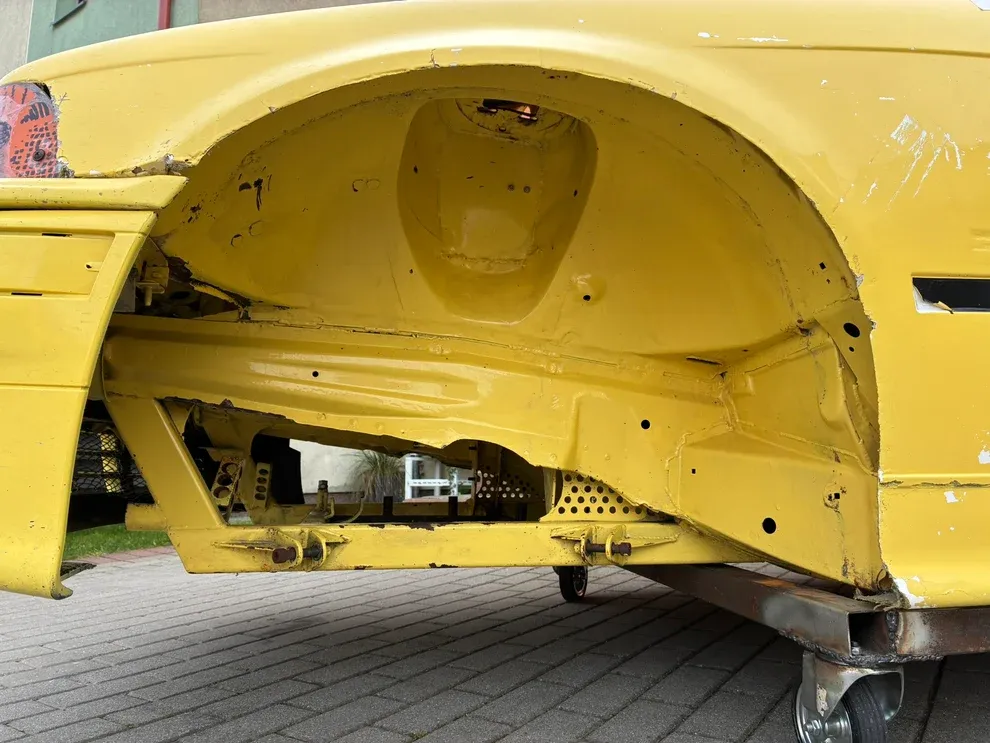
With most of it missing, there's little to see except this custom box-tube subframe. While Supertouring cars had custom subframes and arms, they were closer to the OEM designs but with modified pickup points. This subframe looks crude and utilitarian.
The strut towers are heavily reinforced, both in the well and at the top.
Rear Suspension
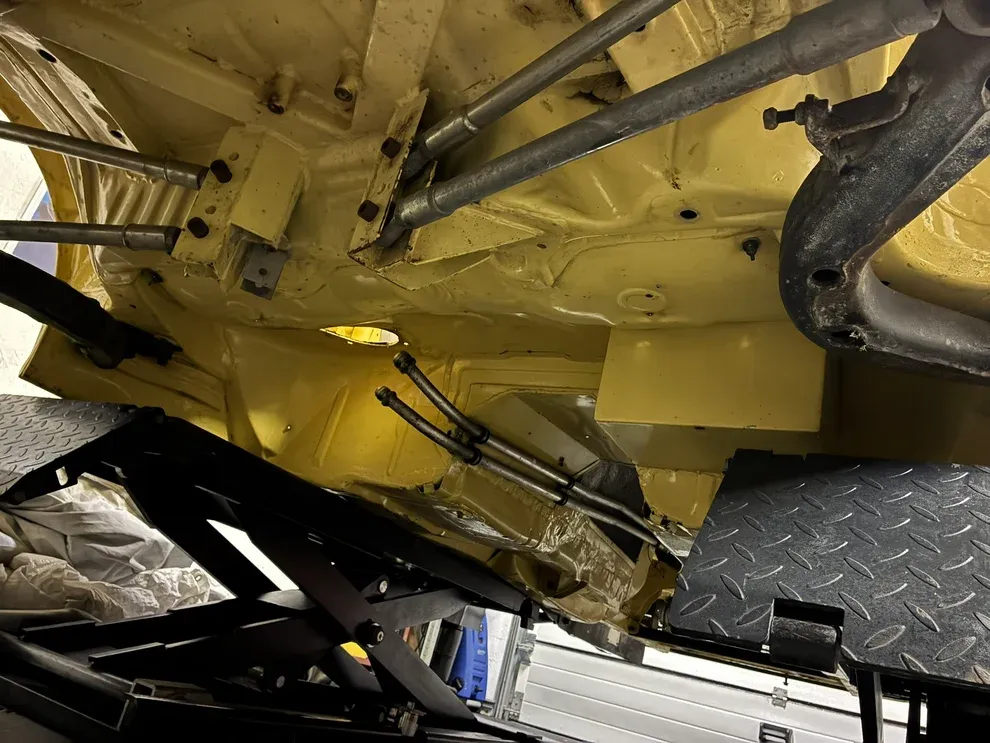
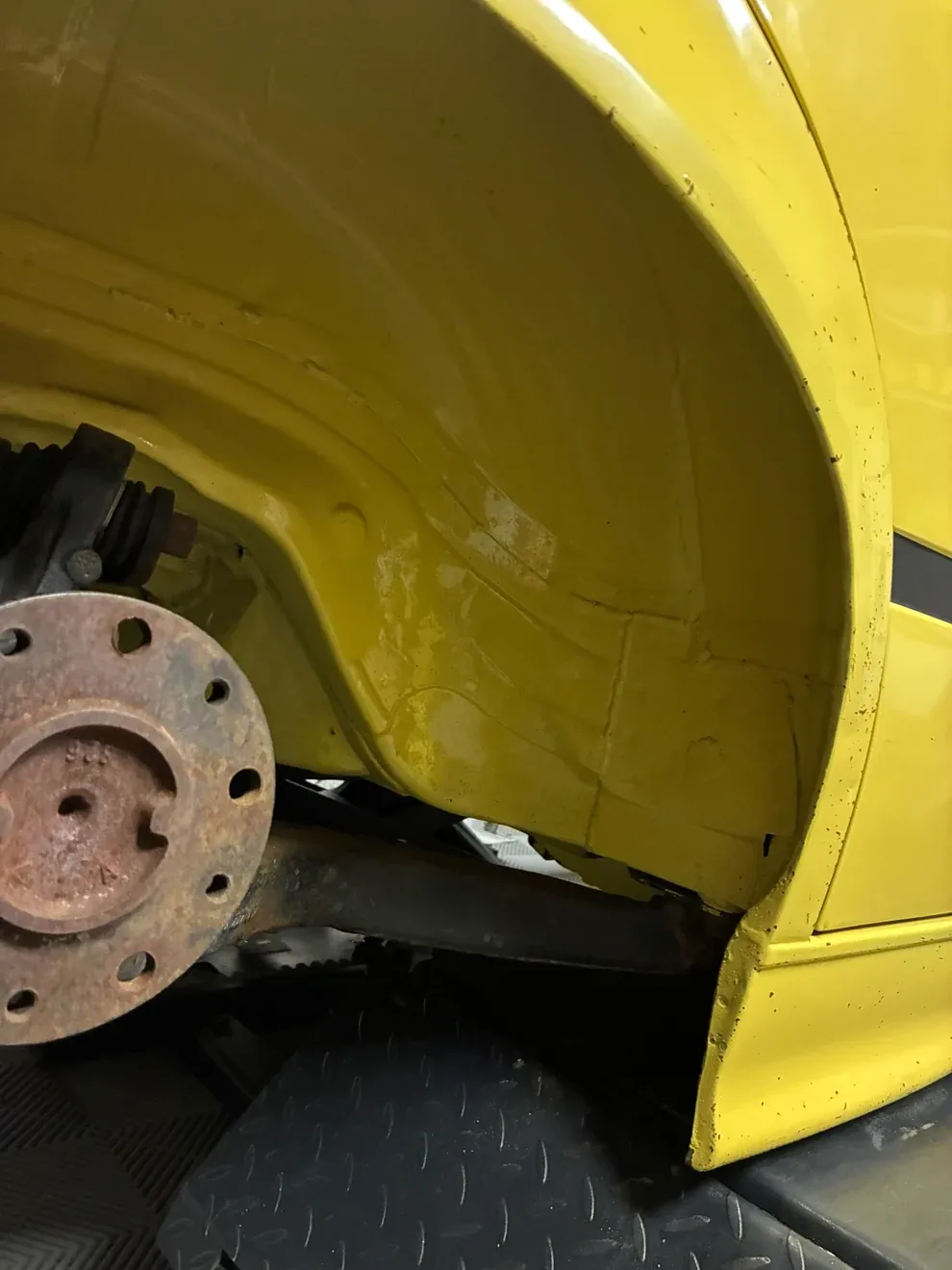
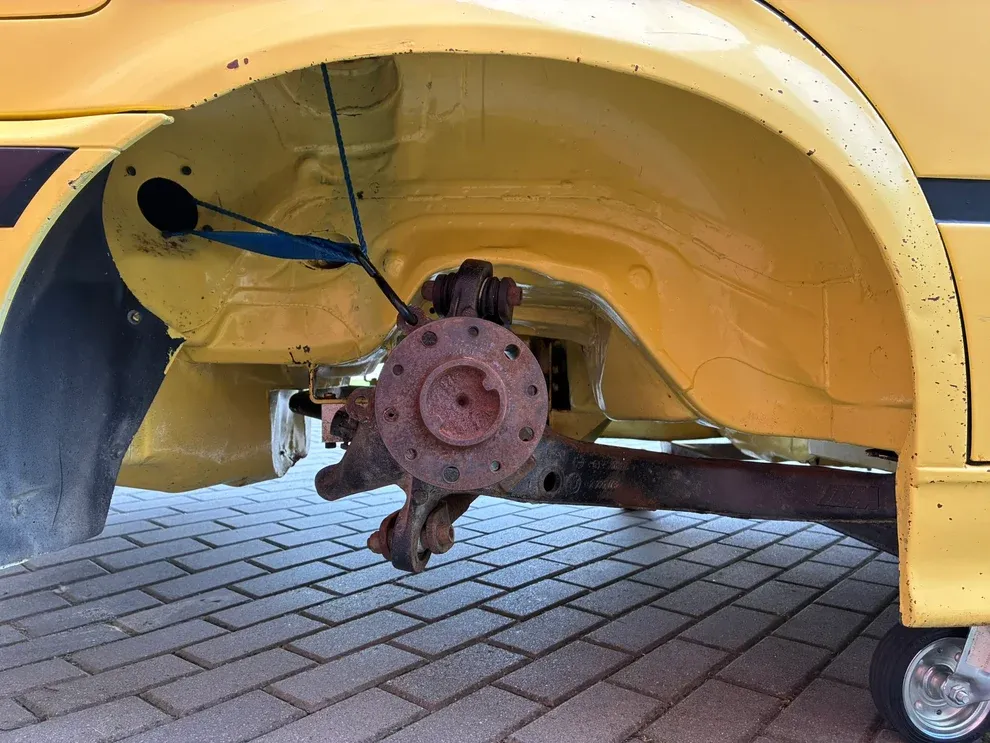
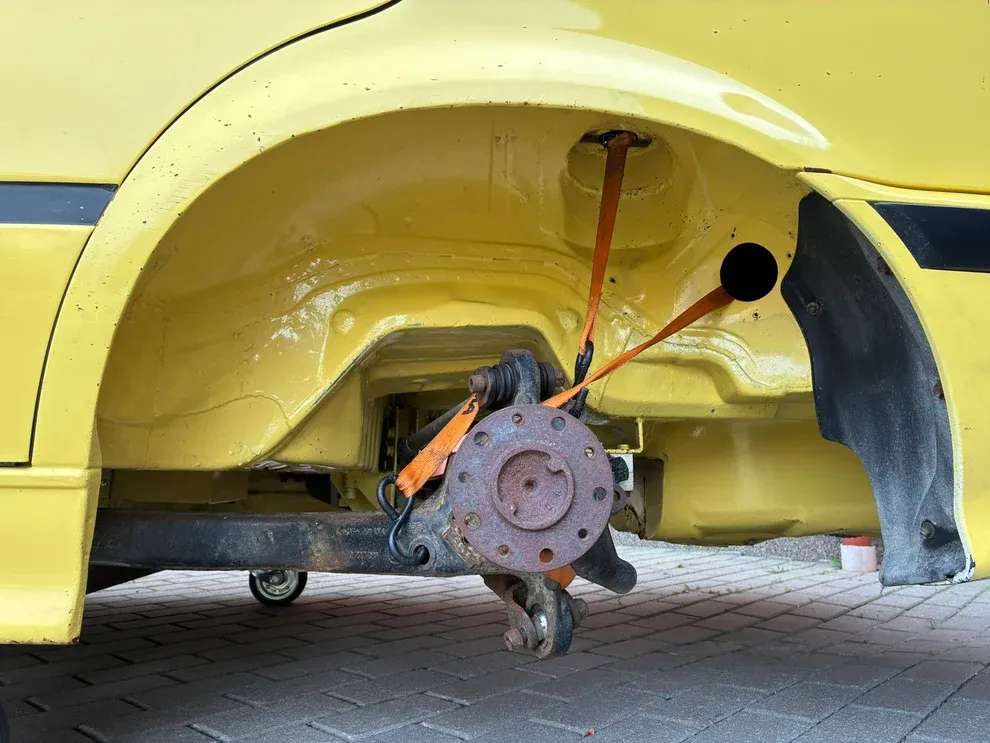
There's a bit more intact at the back end. Stock-looking semi-trailing arms are in place. There is no rear subframe; instead, the suspension links attach to custom chassis bracketry. The stock upper spring arm has been replaced with a tubular heim. The inner arm mounts have additional holes for adjusting the geometry.
The rusty hubs are dual-drilled and presumably once held a centerlock adapter. Plenty of seam welding is visible in the fender wells.
Engine Bay
As you can see in the interior photos, the center console is very large. The engine bay shows a massive transmission tunnel in both height and width.
Early BTCC cars typically used S14 and later S42 engines, with various Holinger, Hewland, and Xtrac sequential transmissions.
Racing sequential transmissions are often small and lightweight, so I'm not sure why they needed so much space. Perhaps, combined with the front subframe, the car housed a much larger drivetrain later in its life?
Trunk Area
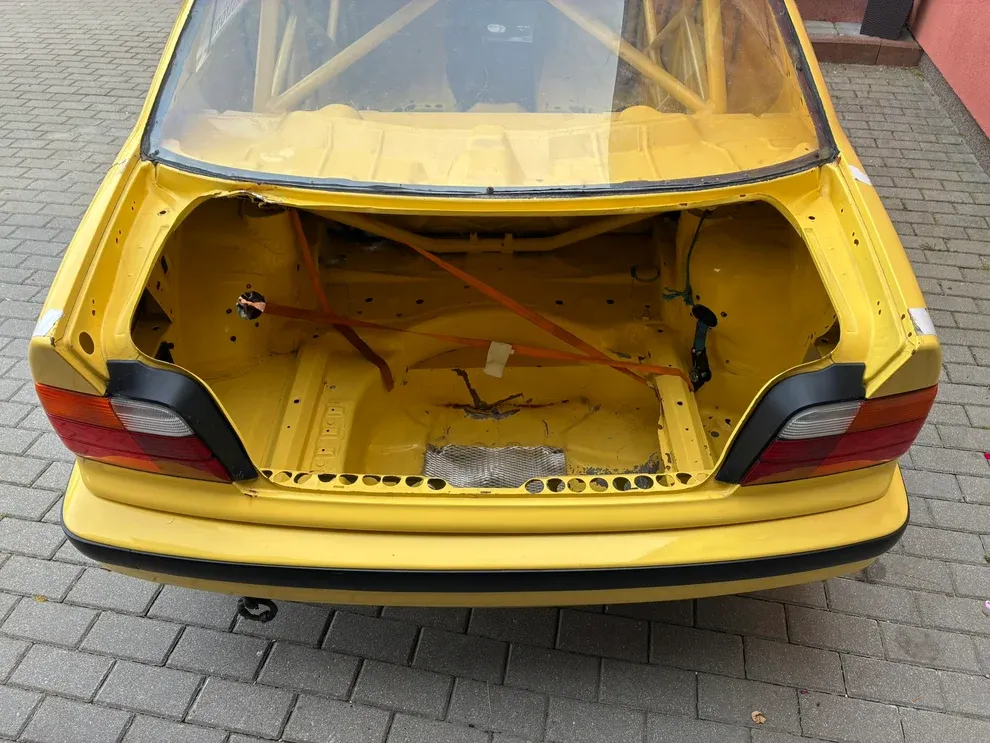
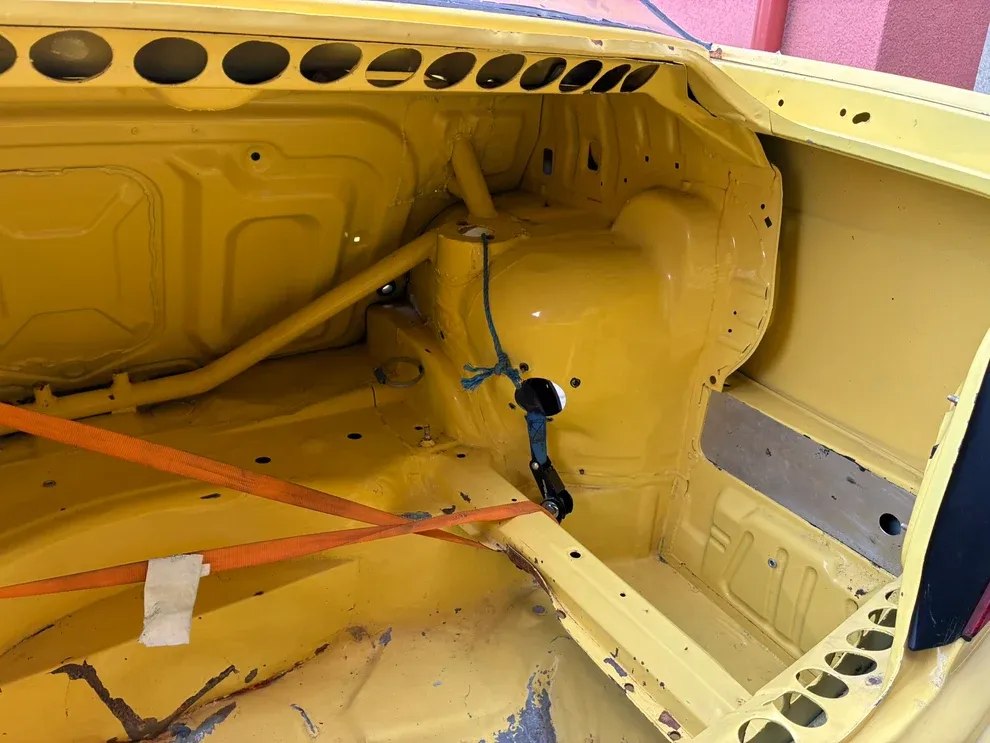
Pretty standard fair, just with a lot of speed holes!
I believe the bar spanning the shock towers down to the trunk floor held two of the bolts that held the differential in
Conclusion
This car, with its pedigree, would make a great restoration project for an enthusiast who appreciates touring car history, and it's priced quite reasonably compared to what you would expect to pay for any run-of-the-mill caged E36 shell.


Grassroots racing, properly overthought.